
About Sickle Cell Disease (SCD)
- Home
- About Sickle Cell Disease (SCD)
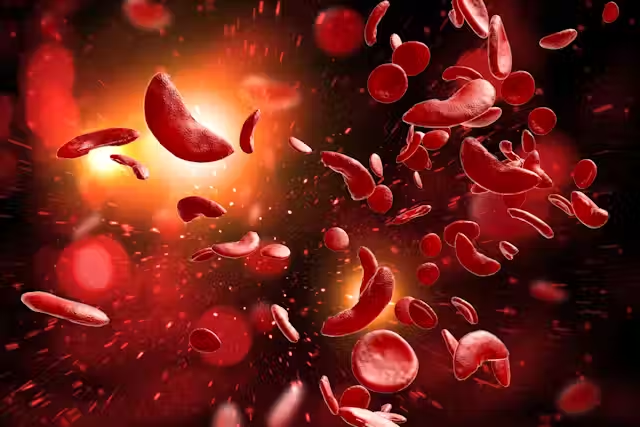
WHAT IS SICKLE CELL DISEASE?
SCD is an inherited condition in which the haemoglobin found in red blood cells is defective. This abnormal haemoglobin causes the red blood cells to be distorted into a sickle shape. Such cells live for a much shorter time than normal cells and do not function properly.
WHAT IS SICKLE CELL TRAIT?
Each person has two genes that control the formation of haemoglobin, one gene from each parent. A person in whom there is only one normal haemoglobin gene and in which the other is a sickle gene is said to have sickle cell trait, also known as a carrier. If you have a sickle gene, you can pass it on to your offspring. Carriers of sickle cell disease are healthy and, unless screened, are unaware of their status.
WHO CAN GET SCD?
SCD can occur in all ethnic groups but is found primarily in persons of African and East Indian origin.
HOW IS SCD DIAGNOSED?
The following tests are used to diagnose SCD:
⦁ Red blood cell count (RBC)
⦁ Complete blood count (CBC)
⦁ Haemoglobin electrophoresis
⦁ High performance liquid chromatography
⦁ (HPLC)
⦁ Evaluation of a peripheral blood smear
These tests are available in most labs, and are relatively inexpensive.
HOW IS SCD INHERITED?
Sickle cell is an inherited disease which is passed from parents to their children through genes. When both parents have sickle cell trait, for each pregnancy, the chances are:
⦁ 25% that the baby will have only normal haemoglobin
⦁ 50% that the baby will have both normal and sickle haemoglobin (sickle cell trait)
⦁ 25% that the baby will have only sickle haemoglobin (sickle cell disease).
The chances are the same for EACH pregnancy with the same partner.
MOST FREQUENT CLINICAL PROBLEMS
⦁ Painful crises – This is the most common manifestation of sickle cell at all ages. Most pain episodes are mild and can be treated at home with pain killers and non-medical therapies such as massages and hot baths. On the other hand, some crises can be severe, do not respond to home management and require visits to an emergency room or outpatient treatment unit.
⦁ Anaemia – Healthy blood cells have an average life span of 120 days but sickle blood cells are fragile and die after only 10 to 20 days.
⦁ Frequent infections – Infants and young children with SCA are extremely vulnerable to infections in the lungs, blood, and bone.
⦁ Strokes – Sickle cells block blood flow to an area in the brain, resulting in decreased oxygen delivery and brain injury. Occurs commonly in children.
⦁ Leg ulcers – Painful lesions or sores mostly seen on the ankles, and aggravated by hot climate, trauma, infection and severe anaemia.
⦁ Pulmonary hypertension – High blood pressure which affects the arteries in the lungs and the right side of the heart. A common cause of sudden death in people with SCD.
⦁ Gall stones


TYPES OF SICKLE CELL DISEASE
The three most common types of SCD are:
⦁ Sickle Cell Anaemia (HbSS) – The most common type, which occurs when the child inherits sickle haemoglobin from both parents.
⦁ SC Disease (HbSC) – Less common and usually less severe. It occurs when a child inherits sickle haemoglobin (HbS) from one parent and C haemoglobin (HbC) from the other.
⦁ Sickle Beta-Thalassaemia (HbS Beta-Thal) – Occurs when the child inherits sickle haemoglobin from one parent and beta thalassemia from the other.
WHAT IS THE TREATMENT?
Sickle cell anaemia is a chronic disease which accompanies the child throughout his/her life. With early diagnosis and treatment, together with parental education and involvement, affected people are living longer and surviving to middle and late adulthood. Treatments may include medications to reduce pain and fever and to prevent complications, blood transfusions and supplemental oxygen, antibiotics and other supportive treatments. A bone marrow transplant offers the only cure for SCD, but it remains a risky and expensive treatment option.
Hydroxyurea
Hydroxyurea is currently being prescribed for the treatment of SCD. This drug increases the production of foetal haemoglobin, which is found in newborns. There is good evidence now that Hydroxyurea reduces sickling crises and the need for blood transfusions, although, rarely, it may not be suitable for all patients. Hydroxyurea has the potential to reduce bone marrow activity, and this, as a consequence, increases the risk of infection.
Careful follow-up is needed, with regular visits to the clinic. Hydroxyurea is not a cure for sickle cell disease, but it is an effective treatment for preventing or reducing sickling crises.
Suggestions for staying healthy:
⦁ Drink plenty of water
⦁ Avoid temperature extremes and high altitudes
⦁ Avoid stress
⦁ Take folic acid supplements daily and eat a balanced diet.